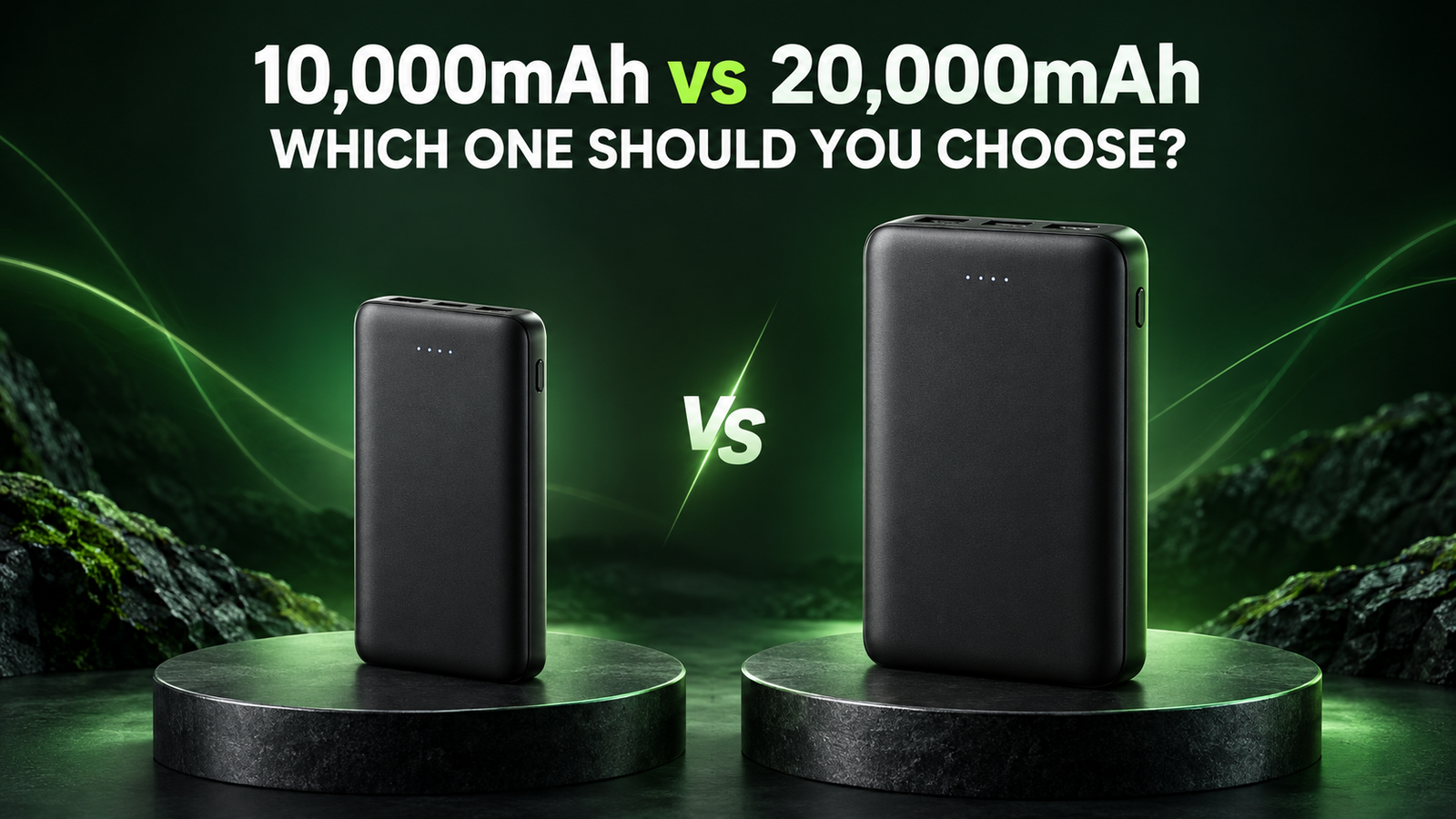
Finding the best power bank in Nepal is not simply a matter of choosing the largest number printed on the box. A 50,000mAh model can provide exceptional backup, but it may be unnecessarily large for someone who only needs an emergency charge during a daily commute. Meanwhile, a compact 10,000mAh power bank may feel perfect in a pocket yet fall short for a long road trip, outdoor work, or several devices.
The right choice depends on four practical questions: How many devices do you charge? How long are you usually away from a wall outlet? How much weight are you comfortable carrying? And do you value built-in cables, wireless charging, or maximum capacity most?
This Nepal-focused guide compares 10,000mAh, 20,000mAh, 30,000mAh, and 50,000mAh options so you can choose a power bank that fits your actual routine. It also explains fast-charging standards, ports, displays, wireless charging, and common buying mistakes. If you already know what you need, you can browse all GreenLife power banks available in Nepal.
Prices and availability were checked on August 12, 2026. Promotional prices may change.
A useful buying rule is to choose the smallest capacity that comfortably covers your longest normal day. This keeps the power bank practical while preserving enough reserve for delays and emergencies. Buyers seeking a power bank in Nepal should also compare warranty support and genuine availability, not only the lowest advertised price.
Quick Answer: Which Power Bank Capacity Should You Choose?
| Capacity | Best for | Main advantage | Trade-off |
|---|---|---|---|
| 10,000mAh | Daily commuting, college, office, one phone | Compact and easy to carry | Less backup for long trips |
| 20,000mAh | Heavy daily use, travel, two or more devices | Best balance of capacity and portability | Larger than a pocket-size model |
| 30,000mAh | Gaming, group travel, outdoor work, emergencies | High backup and multi-device charging | Heavier for everyday carry |
| 50,000mAh | Extended travel, frequent outages, maximum backup | Longest operating time away from a socket | Largest and heaviest option |
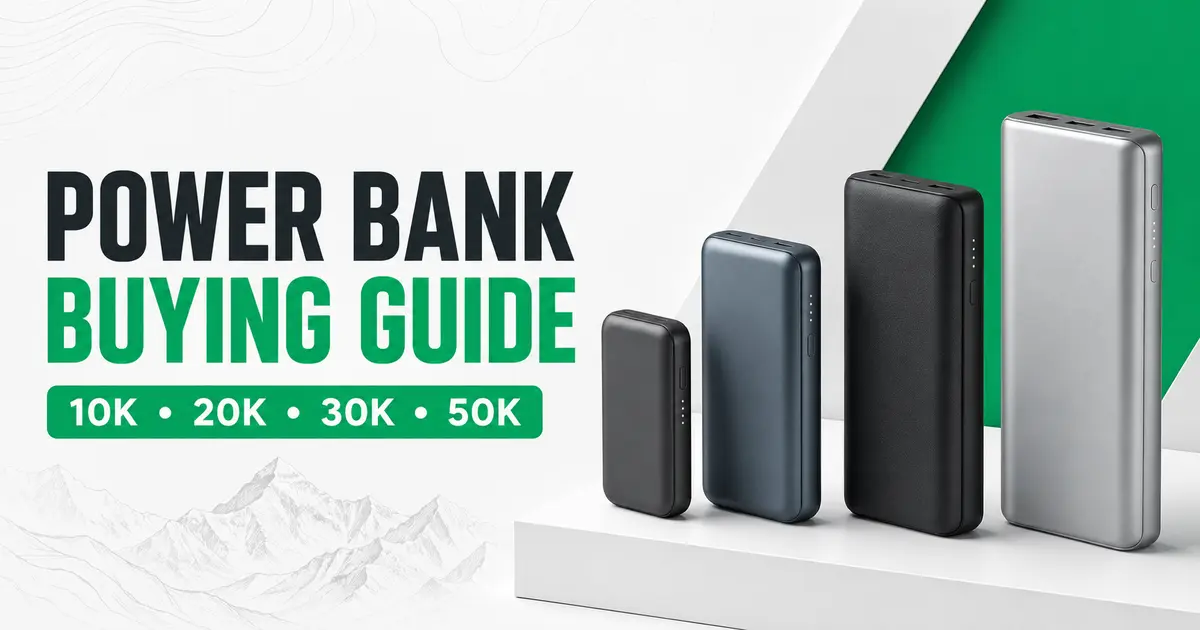
Use this visual comparison to shortlist the best power bank in Nepal for your routine before reviewing charging speed, ports, cables, and weight.
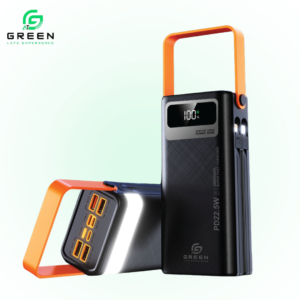
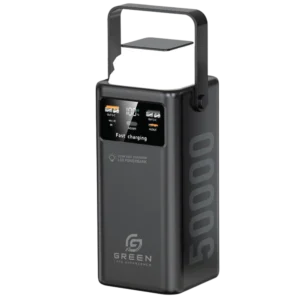
For most buyers comparing the best power banks in Nepal, 20,000mAh is the safest all-around choice. It provides significantly more backup than a 10,000mAh unit without becoming as large as a 30,000mAh or 50,000mAh model. However, the best capacity is always the one that matches your usage rather than the biggest one within your budget.
What Does mAh Really Mean?
Milliampere-hour, written as mAh, describes battery capacity. In simple terms, a higher mAh rating means the power bank stores more energy. It does not mean every milliampere-hour reaches your phone. Voltage conversion, cable resistance, heat, charging speed, and the efficiency of both devices reduce the usable output.
That is why dividing a 10,000mAh rating by your phone’s battery capacity does not give an exact number of full charges. A phone with a 5,000mAh battery will not necessarily receive exactly two complete charges from every 10,000mAh power bank. Real-world results also change when you use the phone while charging, power several devices together, or rely on wireless charging.
Use capacity as a practical comparison:
- 10,000mAh is designed for portable everyday backup.
- 20,000mAh gives heavy users and travelers more breathing room.
- 30,000mAh works well when several devices or longer periods are involved.
- 50,000mAh prioritizes maximum backup over compact size.
10,000mAh vs 20,000mAh vs 30,000mAh vs 50,000mAh
Choose 10,000mAh for Everyday Portability
A 10,000mAh power bank is usually the best starting point for students, office workers, commuters, and anyone who wants backup without carrying a bulky device. It fits easily into a regular bag and can support a phone, earbuds, or smartwatch during a normal day.
This capacity also offers the widest choice of form factors. You can choose a traditional wired model with built-in cables or a magnetic wireless model for compatible phones. If your main concern is a low battery on the way home rather than several days without electricity, 10,000mAh is likely enough.
Choose 20,000mAh for the Best Overall Balance
For many people searching for the best power bank in Nepal, 20,000mAh is the practical sweet spot. It is suitable for long workdays, intercity travel, mobile gaming, content creation, and users who charge more than one device. It also reduces the need to recharge the power bank after every outing.
The trade-off is size. A 20,000mAh unit generally belongs in a backpack or office bag rather than a trouser pocket. If you can accept that small increase in weight, the additional reserve is valuable during travel, fieldwork, or unexpected power interruptions.
Choose 30,000mAh for Multiple Devices and Emergencies
A 30,000mAh power bank is designed for demanding situations. It makes sense for families on a road trip, photographers working outdoors, gamers who spend hours away from a charger, or anyone who regularly powers phones, tablets, earbuds, and smartwatches together.
At this level, the number of outputs becomes especially important. High capacity is most useful when the power bank can distribute that energy conveniently. A digital battery display and emergency light also become valuable during camping, travel, and power cuts.
Choose 50,000mAh for Maximum Backup
A 50,000mAh power bank is a specialist choice for people who prioritize endurance. It can support extended travel, repeated device charging, outdoor events, field teams, and emergency preparation. It is also useful in places where access to a reliable socket is limited.
Do not buy this capacity only because the number looks impressive. A 50,000mAh model is naturally larger and heavier. It works best when it will stay in a vehicle, backpack, work bag, or emergency kit rather than being carried in a pocket every day.
Features That Matter When Buying a Power Bank in Nepal
1. Fast-Charging Output
Capacity tells you how much energy is stored; wattage tells you how quickly compatible devices can receive it. A 22.5W output is more useful for modern phones than an older low-output port, provided your phone and cable support the same charging standard.
Look for technologies such as Power Delivery (PD) and Quick Charge 3.0. These protocols help compatible devices negotiate an appropriate charging rate. Remember that the maximum printed wattage is not guaranteed for every device, port, or multi-device combination.
2. Fast Input and Two-Way Charging
Many buyers focus only on how quickly a power bank charges their phone. The time required to recharge the power bank itself matters too, especially at 20,000mAh and above. Fast input or two-way PD charging can reduce downtime when used with a compatible charger.
3. Built-In Cables
Built-in Lightning and Type-C cables make a power bank easier to grab and use. They are particularly convenient for college, office, travel, and ride-sharing because you do not need to remember a separate cable. Check that the included connectors match the devices you actually own.
4. Port Selection and Simultaneous Charging
A single output may be enough for one phone, but households and travelers should compare USB-A, USB-C, and built-in cable outputs. If you plan to charge several devices, confirm that simultaneous charging is supported. Charging speed may be shared when several outputs are active.
5. Magnetic and Wireless Charging
A magnetic wireless power bank can be more convenient than a cable for compatible phones. Alignment, case thickness, device compatibility, and heat can affect performance. Wired charging is generally the better choice when maximum speed and efficiency matter, while wireless charging is attractive for convenience and a cleaner everyday setup.
6. Digital Battery Display
A percentage display is more informative than a simple row of indicator lights. It helps you decide whether the power bank needs charging before leaving home and reduces the chance of carrying an empty backup device.
7. Warranty, Support, and Authenticity
A power bank stores substantial electrical energy, so unknown cells and unsupported products are a poor place to save money. Buy from an official store or authorized retailer, keep your invoice, and check the warranty terms. GreenLife’s current power-bank models include a six-month warranty, while exact coverage should always be confirmed on the relevant product page and warranty policy.
Best Power Bank in Nepal by Use Case: GreenLife Picks
The following recommendations use current GreenLife specifications and availability. “Best” refers to the model’s intended use case, not a claim that one device is ideal for every buyer.
Best Compact Daily Option: Green Turbo-10
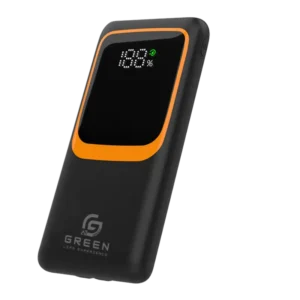
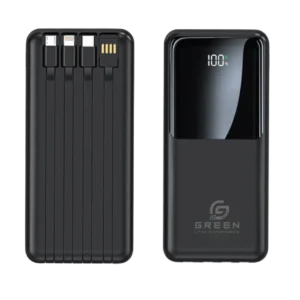
The Green Turbo-10 10,000mAh Powerbank is built for everyday portability. It combines 22.5W PD fast charging, Quick Charge 3.0, built-in Lightning and Type-C cables, USB-A and USB-C outputs, and a digital percentage display. At a checked promotional price of NPR 1,699, it is a strong entry point for daily commuters and students who want a cable-ready backup.
Best Magnetic Wireless Option: Green Mag Booster
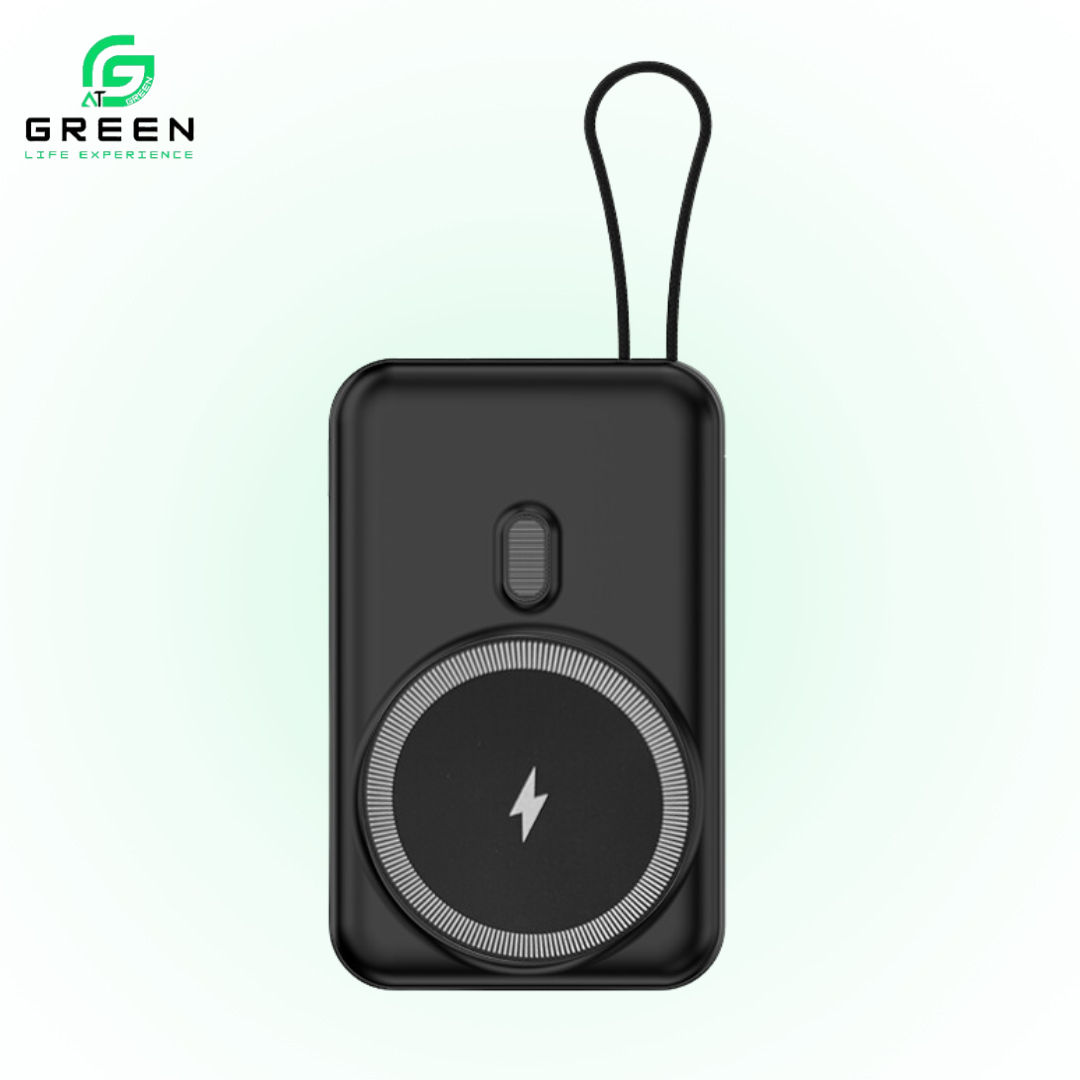
The Green Mag Booster 10,000mAh MagSafe Powerbank is designed for convenient magnetic charging. It supports up to 15W wireless charging, 22.5W wired PD output, Qi charging, a digital display, and a foldable stand. Its checked promotional price is NPR 2,399. It is the most suitable choice here for compatible-phone users who value wireless convenience and a slim everyday design.
Best All-Round Capacity: Green Turbo-20
The Green Turbo-20 20,000mAh Powerbank offers the most balanced combination for heavy daily use. It provides 22.5W fast charging, two-way PD, Quick Charge 3.0, a built-in cable, multiple outputs, simultaneous charging, and a digital percentage display. The checked promotional price is NPR 2,299. For most buyers who want the best power bank in Nepal without moving to an oversized model, this is the capacity category to consider first.
Best for Several Devices: Green Thunder X4
The Green Thunder X4 30,000mAh Powerbank focuses on high-capacity, multi-device use. Its specifications include 22.5W PD charging, Quick Charge 3.0, seven outputs, two inputs, a digital display, attached wires, and an emergency light. At a checked promotional price of NPR 3,199, it suits group travel, demanding workdays, outdoor use, and emergency backup better than a compact daily model.
Best Maximum-Backup Option: Green Turbo-50
The Green Turbo-50 50,000mAh Powerbank is intended for buyers who need the longest backup in the range. It features 22.5W PD fast charging, built-in Lightning, Type-C, Micro USB, and USB cables, a digital percentage display, an emergency light, and support for three-device charging. Its checked promotional price is NPR 4,999. Choose it for extended backup, not pocket portability.
| Model | Capacity | Key advantage | Checked price |
|---|---|---|---|
| Turbo-10 | 10,000mAh | Compact with built-in cables | NPR 1,699 |
| Mag Booster | 10,000mAh | 15W magnetic wireless charging | NPR 2,399 |
| Turbo-20 | 20,000mAh | Balanced capacity and portability | NPR 2,299 |
| Thunder X4 | 30,000mAh | Seven outputs and emergency light | NPR 3,199 |
| Turbo-50 | 50,000mAh | Maximum backup with built-in cables | NPR 4,999 |
How to Choose the Best Power Bank in Nepal for Your Routine
For Students and Office Commuters
Start with 10,000mAh. It is easier to carry, less likely to be left at home, and sufficient for routine top-ups. Built-in cables are more valuable than extra capacity if forgetting a cable is your usual problem.
For Frequent Travelers
When choosing the best power bank in Nepal for frequent travel, consider 20,000mAh for normal trips and 30,000mAh for multiple devices or longer journeys. Check the weight and connectors before flying. Review your airline’s current rules and IATA’s lithium-battery travel guidance, which says power banks belong in carry-on baggage rather than checked baggage. Airline requirements can vary, so verify them directly before each trip.
For Gaming and Content Creation
A 20,000mAh or 30,000mAh model is more appropriate because gaming, video recording, navigation, and mobile data can drain a phone quickly. Prioritize fast output, a stable cable, and enough ports for accessories.
For Power Cuts and Emergency Kits
Choose 30,000mAh or 50,000mAh when the power bank will serve as household or emergency backup. A clear display and built-in light are useful. Recharge it regularly instead of leaving it empty for months.
For Magnetic Wireless Charging
Choose a compatible 10,000mAh magnetic model if convenience matters more than maximum efficiency. Confirm that your phone and case support magnetic alignment. Use wired charging when you need the quickest or most efficient transfer.
Common Power Bank Buying Mistakes
- Buying capacity without considering weight. A large model provides more backup only if you are willing to carry it.
- Ignoring charging protocols. Your phone, cable, and power bank must support compatible standards to reach higher speeds.
- Counting ports but ignoring shared output. Several devices may charge more slowly when connected together.
- Choosing wireless charging without checking compatibility. Phone model, case thickness, and alignment all matter.
- Buying an unknown product without support. Warranty, authentic cells, and reliable after-sales service are important for a battery product.
- Using the advertised capacity as an exact charge-count promise. Conversion losses and usage conditions affect real output.
- Leaving the power bank in extreme heat. Hot vehicles, direct sun, moisture, and physical damage can reduce safety and battery life.
How to Care for Your Power Bank
- Use a compatible, good-quality charger and cable.
- Keep the power bank dry and away from direct heat.
- Do not use a swollen, cracked, leaking, or unusually hot unit.
- Avoid crushing or dropping it.
- Recharge it periodically when stored for long periods.
- Keep ports clean and stop using damaged connectors.
- Follow the product manual and warranty instructions.
Good care cannot make a battery last forever, but it can protect performance and reduce avoidable damage. If a product behaves unusually, disconnect it and contact authorized support rather than attempting to open or repair it yourself.
Frequently Asked Questions
What capacity power bank is best for a smartphone?
A 10,000mAh model is suitable for everyday phone backup. Choose 20,000mAh if you are a heavy user, travel frequently, or want to charge several devices before recharging the power bank.
Is a 10,000mAh or 20,000mAh power bank better?
10,000mAh is better for portability; 20,000mAh is better for longer backup. The right answer depends on whether compact size or extra reserve matters more in your routine.
Which is the best power bank in Nepal for travel?
For regular trips, a 20,000mAh model offers a strong balance. For several devices or longer road travel, 30,000mAh may be more suitable. Always check current airline restrictions before taking any power bank on a flight.
Does 22.5W mean every phone will charge at 22.5W?
No. The phone, cable, port, charging protocol, battery temperature, and current charge level all influence the actual rate. The device safely negotiates a supported speed.
Is a wireless power bank better than a wired one?
Wireless models offer convenience and fewer cable interruptions. Wired models generally provide better efficiency and may charge faster. Choose based on compatibility and how you normally use your phone.
Can one power bank charge a phone, earbuds, and smartwatch?
Yes, if it has compatible outputs and supports simultaneous charging. Check the total shared output because charging several devices at once can reduce the speed available to each one.
Why does a power bank deliver less than its printed capacity?
Energy is lost during voltage conversion and through heat, cables, and charging electronics. Phone usage during charging and wireless transfer can further reduce the energy that reaches the battery.
Where can I buy an original GreenLife power bank in Nepal?
You can buy through the official GreenLife Experience website or an authorized retail partner. Shopping through an official channel helps protect warranty eligibility and access to after-sales support.
Final Recommendation
The best power bank in Nepal is the one you will actually carry and use. Choose 10,000mAh for convenient daily backup, 20,000mAh for the strongest overall balance, 30,000mAh for demanding multi-device use, and 50,000mAh when maximum reserve matters more than size.
Compare capacity, charging speed, cable convenience, ports, wireless compatibility, display, warranty, and weight before looking at price alone. Ready to choose? Explore GreenLife power banks in Nepal, check current availability, and select the model that fits your day.